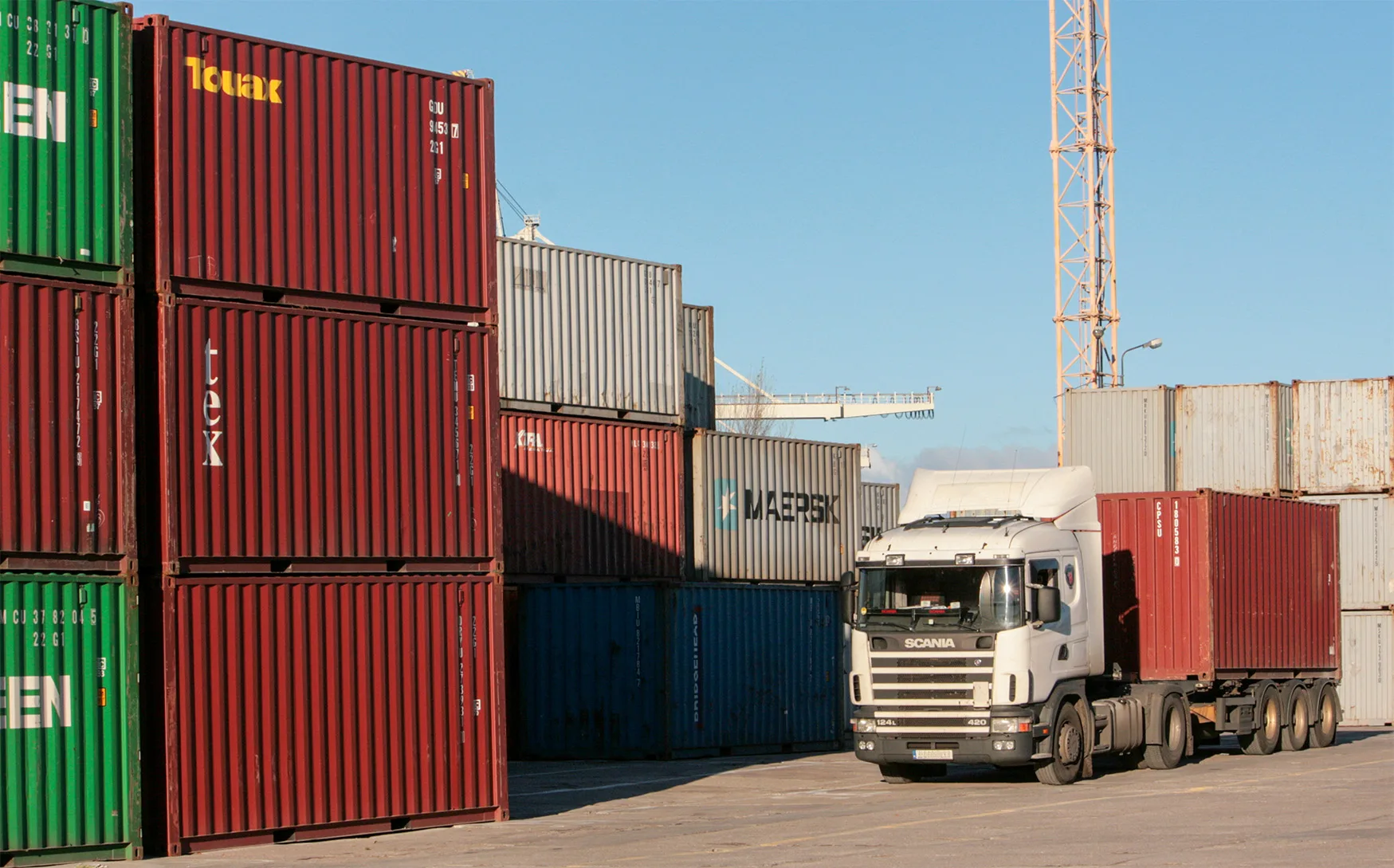

We have been organising domestic and international road transport since 1999: full truckloads, part loads, containers collected straight from the quay, ADR consignments and oversized cargo. We cover German, Scandinavian and Western European destinations, and we handle customs clearance ourselves, under AEO status.
Road Transport - call us or send an enquiry. We prepare every quote individually.

Road transport is the carriage of goods by road vehicle, either domestic or international. A domestic movement is governed by Polish carriage law; an international one is governed by the CMR consignment note and the Community licence. What separates them is not distance but the set of documents and the way those documents allocate liability.
We collect cargo from any location in Poland and deliver it throughout Europe. We match the carrier and the vehicle to the consignment, prepare the documentation and run the job through to unloading at the consignee. For the client's logistics department this means a single point of contact instead of separate conversations with a haulier, a customs agency and a terminal. We do not own a fleet and we do not pretend otherwise - we work with a vetted network of carriers, and we answer for choosing them.
Szczecin is an advantage here, not just an address. We take cargo directly off the quay, and customs formalities are handled by our own AEO-accredited agency, within the same job.
The scope covers the whole international movement, from taking the order to confirmed unloading. Individual services can be ordered separately - most often the documentation and customs clearance alone, where the client already has a carrier.
Every international job runs in the same order, because the documents dictate it: without cargo details there is no vehicle to select, without a vehicle there is no CMR, and without a CMR nothing leaves the loading point.
Route and cargo analysis
Carrier and vehicle selection
Transport coordination
Delivery monitoring
International transport is placed with a forwarder who answers for the paperwork and for the choice of carrier, not merely quotes a rate per kilometre. When a customs entry or a SENT notification is wrong, the financial consequences reach the consignor, so choosing the organiser is a decision about where the risk sits. On-time delivery depends on the same two things: picking the right carrier and having complete documents, not on promises in an offer.
Located at the port of Szczecin - we take cargo off the quay, with no intermediary
Our own AEO-accredited customs agency - clearance and transport in a single job
A vetted carrier network - operators holding a Community licence and carrier's liability cover
27 years in this market - trading since 1999, on the same routes
Difficult cargo without a subcontractor - we run ADR and oversized movements ourselves
One person on your job - from quotation to confirmed unloading
Request a road transport quotation.
Contact us →
International transport is the carriage of goods where the place of loading and the place of delivery lie in two different countries. The difference from a domestic movement is not one of distance. The run from Szczecin to Berlin is a little over 150 km and is an international movement; a run to Rzeszow is more than 700 km and remains domestic. What decides is crossing the border, because the legal basis of the whole contract of carriage changes with it.
Domestic carriage rests on Polish carriage law. International carriage falls under the Convention on the Contract for the International Carriage of Goods by Road (CMR), signed in Geneva on 19 May 1956. The Convention applies by operation of law wherever at least one of the countries of loading or delivery is a party to it, and the parties cannot contract out of it. It is the source of the consignment note format, the scope of the carrier's liability and the time limits for claims.
The second change concerns the carrier itself. Carriage of goods for hire or reward between EU member states requires a Community licence, issued under Regulation (EC) No 1072/2009, and a certified copy of it must be carried in the vehicle. A haulier holding only a national permit cannot perform a movement to Germany, however suitable its vehicle.
We organise international road transport as a closed job: from receiving the cargo details, through selecting the carrier and the vehicle, issuing the documents and supervising the run, to confirmed unloading at the consignee. The client has one point of contact and one invoice, even where several parties are involved along the route.
We handle full truckloads, part loads and containers, including dangerous goods under ADR and consignments exceeding dimensional limits. On non-EU destinations customs clearance is added, handled by our own agency, so the transport and customs documents are produced in one place.
The two roles are worth separating, because offers often blur them. A carrier performs the movement with its own vehicle and answers for the cargo under the CMR. A freight forwarder organises the movement: selects the carrier, prepares the documentation and answers for the diligence of that choice. Magemar acts as forwarder and organiser, working with a vetted network of carriers holding a Community licence and carrier's liability cover.
On Western European and Scandinavian routes road transport is the default, because it is the only mode that takes a consignment door to door without transhipment. On deep-sea destinations that role passes to sea transport, and the road leg is reduced to the drayage to the port and the collection of the container from the quay - which is exactly how it usually works in Szczecin. We do not organise air freight: where time is the only criterion, that is a separate mode with its own economics and its own documents.
The choice of mode is settled by the ratio of weight to cargo value and by the acceptable transit time. Heavy goods of moderate value are best moved by road or sea, because the cost of a faster mode would exceed the value of the goods themselves. This is why we provide transport services and forwarding services within one job: the client receives the right mode together with a complete set of documents, not just a rate per kilometre.
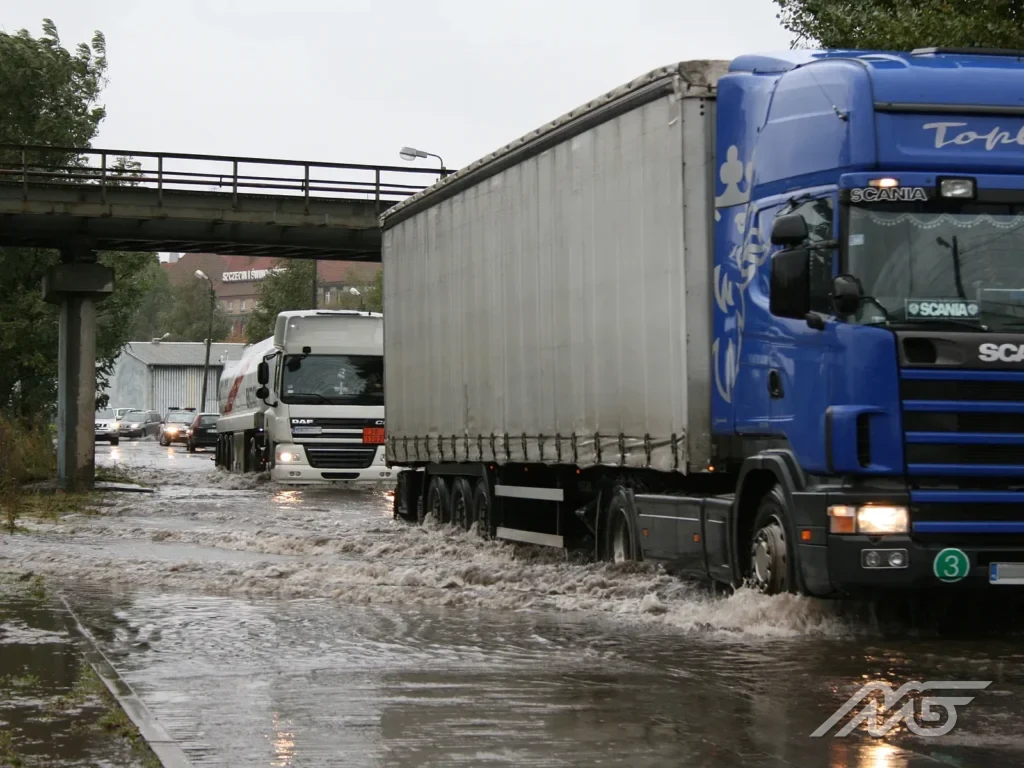
The position of Szczecin shifts the economics of a movement several hundred kilometres to the west and to the north. The city lies about 12 km from the German border and about 100 km from the ferry terminals in Swinoujscie. For a consignor in West Pomerania that means a shorter run to the border than from any other major centre in Poland, and for containerised cargo it also removes the long haul from the port into the interior.
Berlin, Brandenburg and Mecklenburg are within a single driving shift, with no daily rest required en route. Beyond them the whole motorway network opens towards Hamburg, the Ruhr and southern Germany. A movement to Germany is an intra-EU movement, so no customs clearance applies, but it still needs a CMR note, a Community licence and, for sensitive goods, a SENT notification.
Consignments to Sweden, Denmark and Norway normally travel via the ferry crossings from Swinoujscie or overland across the Oresund bridge. The routing changes the cost structure: a ferry means a charge per linear metre and a reserved slot, while the overland route means more kilometres and bridge tolls, but no dependence on sailing schedules. Norway lies outside the European Union and outside the customs union, so cargo requires full clearance, even though the country belongs to the European Economic Area.
Benelux, France, Austria and the Czech Republic are served on the standard intra-EU basis. On these routes the deadline is driven not by kilometres but by traffic restrictions: weekend and public holiday bans on heavy goods vehicles apply in Germany, France and Austria, and their calendar has to be taken into account as early as the loading plan.
For every destination we give a delivery date after checking vehicle availability and the restrictions in force on the route, not from a table. Declaring fixed transit times without knowing the cargo and the departure date is a promise this industry cannot keep.
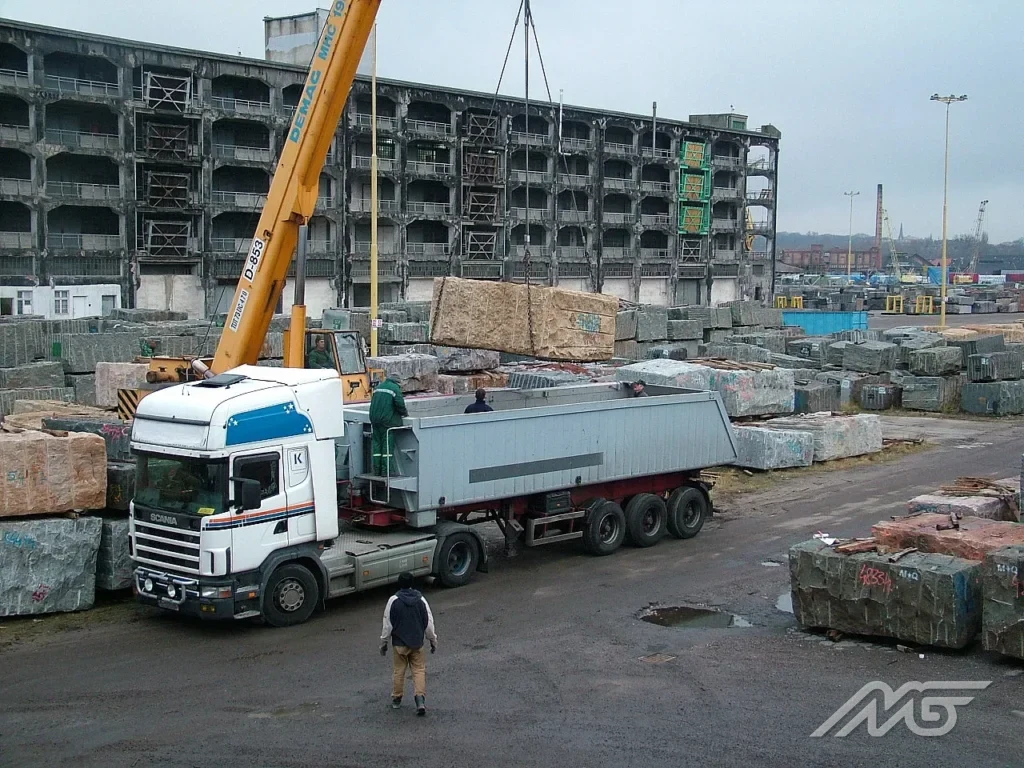
The form of carriage is decided not by the weight of the cargo but by how much trailer space it occupies and how urgent the delivery is. A standard curtain-sided trailer offers roughly 13.6 m of loading length, takes 33 euro pallets in a single layer and accepts up to about 24 tonnes of cargo. Those three figures mark the boundary between a full truckload and a part load.
On a full truckload the vehicle runs with a single consignment, from consignor straight to consignee. There is no transhipment, no terminal waiting and no other consignment that has to be given priority. It suits cargo from a dozen or so pallets upwards, goods sensitive to handling, and any job with a fixed deadline. On FTL the client pays for the vehicle regardless of how fully it is used.
For smaller consignments the cargo shares the space with others travelling in the same direction. The cost is apportioned to the floor space taken or the volumetric weight, so moving a few pallets works out considerably cheaper than hiring a whole vehicle. The price of that saving is time: the route covers several points and the cargo may pass through a transhipment terminal.
Groupage is a particular case of a part load, where a consignment fills spare space on a vehicle already running that route. It is often the cheapest option on the market, but availability depends on what happens to be moving, so it cannot be planned far ahead.
In practice the boundary sits around half a trailer. Below a dozen or so pallets a part load is cheaper; above that the difference starts to disappear, and at a full load FTL wins on unit price as well. Risk is a separate calculation: fragile cargo, awkwardly shaped cargo or cargo requiring a controlled temperature is usually unsuitable for consolidation, even when it takes up little space.
At the quotation stage we check both routes and say which one works out better for that particular consignment and date. What we need for this is the dimensions, the weight, the number and type of loading units, and whether the cargo can be stacked.
The full set of documents has to be ready before departure, because most of them cannot be produced en route. A roadside check within the EU examines the vehicle, the driver and the cargo at the same time, and a single missing certified copy can hold up a movement until the document is brought to wherever the vehicle has been stopped.
The CMR note is evidence of the contract of carriage and confirmation that the cargo has been taken over. It is issued in three original copies: for the consignor, for the consignee and for the carrier. It records the details of the parties, the place and date of loading, the place of delivery, a description of the goods with their weight, and the carrier's reservations as to the condition of the consignment.
Reservations in a CMR note carry real financial weight. If the carrier takes over the cargo without comment, the goods and the packaging are presumed to have been in good condition. Entering a reservation on receipt of a damaged pallet is the only moment at which that presumption can be rebutted without a dispute.
A carrier performing carriage of goods for hire or reward between EU member states must hold a Community licence, and a certified copy of it must be in the vehicle. The authorisation is granted on proof of financial standing, good repute and professional competence. Verifying that the carrier actually holds it and that the document is valid is the job of the transport organiser, not of the client.
The Polish Act of 9 March 2017 on the system for monitoring the road and rail carriage of goods requires movements of goods classified as sensitive to be notified. It covers, among others, fuels, oils, denatured alcohol and dried tobacco. The notification is filed in the register before the movement begins, and the obligations are divided between the sending party, the receiving party and the carrier. The vehicle must also transmit geolocation data throughout the run across Polish territory.
Failure to notify, or data that does not match the facts, carries financial penalties running into tens of thousands of zloty, imposed separately on several parties in the chain. This is one of the points where a forwarder's mistake lands directly on the consignor, which is why we file these notifications on our side.
The carrier's liability under the CMR Convention is capped, and in many cases it does not cover the full value of the cargo. This is the most common misunderstanding in international transport: the consignor assumes that because the goods are in the carrier's hands, they are insured for their value. The Convention says otherwise.
Under Article 23(3) of the CMR Convention, compensation for loss of or damage to goods cannot exceed 8.33 units of account per kilogram of gross weight short. The unit of account is the SDR, the special drawing right of the International Monetary Fund, whose rate changes daily.
The consequence is easy to work out on an example. A pallet of electronics weighing 300 kg and worth PLN 200,000 gives, at that limit, compensation calculated from 2,499 SDR - a fraction of the value of the goods. For heavy, low-value cargo the limit is often sufficient; for light, high-value cargo it never is.
Carrier's liability insurance, known in Poland as OCP, protects the carrier within the scope of its liability, which is to say up to the CMR limit and only where the carrier is at fault. It does not respond to events for which the carrier is not liable: force majeure, inherent vice of the goods, or defective packing on the consignor's side.
Cargo insurance works differently: it protects the cargo itself, up to its declared value, regardless of who was at fault. For goods of high unit value it is the only arrangement that genuinely closes the risk. It is worth considering whenever the value of a consignment exceeds its weight multiplied by the Convention limit.
Visible damage must be notified to the carrier no later than on delivery, by entering a reservation on the CMR note. For damage not apparent from the outside there are seven days from delivery, excluding Sundays and public holidays. Where delivery is delayed, a reservation must be lodged within twenty-one days of the goods being placed at the consignee's disposal.
Missing these deadlines does not extinguish a claim automatically, but it shifts the burden of proof onto the claimant and in practice decides the outcome of a dispute. That is why, on every delivery, we ask the consignee to check the cargo before signing the note.
Delivery dates in international transport are set by drivers' hours rules, not by vehicle speed. Regulation (EC) No 561/2006 applies identically across all EU member states and is enforced from tachograph records, so no declared deadline can work around it.
Daily driving time is 9 hours, extendable to 10 hours no more than twice a week. After 4.5 hours of driving the driver is entitled to a 45-minute break, which may be split into 15 and 30 minutes in that order. Weekly driving time cannot exceed 56 hours, and 90 hours across any two consecutive weeks.
The daily rest period is 11 hours and may be reduced to 9 hours no more than three times between two weekly rest periods. A regular weekly rest is 45 hours, a reduced one 24 hours, and any reduction has to be compensated within the following three weeks.
At an average technical speed of 65-70 km/h one driving shift covers roughly 600-700 km. The Szczecin to Berlin run fits into a single shift with a wide margin. Southern Sweden or the Ruhr usually do as well, though with a ferry crossing or a weekend ban in the background. A delivery to Spain or northern Norway means at least one daily rest en route, and often two.
Urgent movements are solved with a double-manned crew, the drivers relieving each other while each takes their own rest. The vehicle then runs almost without stopping, but the cost rises by a second driver. It is a genuine option, not a marketing device, and we put it in the quotation whenever the deadline calls for it.
Regulation (EU) 2020/1054 added obligations that affect vehicle availability on western routes. The driver must return to the carrier's operating centre or to their place of residence every four weeks, the vehicle must return to an operating centre in the country of establishment every eight weeks, and a regular weekly rest may not be taken in the cab. The rules also restricted cabotage: after an international delivery, three domestic movements are permitted within seven days, followed by a four-day cooling-off period for the same vehicle in the same country.
On destinations outside the European Union a customs procedure is added to the movement, and it is usually that procedure, rather than the driving, which decides whether the cargo arrives on time. Crossing the border itself is a matter of hours; preparing the documents can take days if a single item in the description of the goods is missing.
Clearance is required for every movement leaving the customs territory of the Union. Among the destinations served from Szczecin this applies above all to Norway, which belongs to the European Economic Area but remains outside the customs union, and to the United Kingdom, which left the customs union on 1 January 2021. Switzerland, Ukraine and the non-EU Balkan countries are likewise outside it.
Within the Union there is no clearance, but that does not mean there are no formalities. An intra-Community supply of goods still requires correct data for tax purposes and, for sensitive goods, a SENT notification.
Where cargo crosses a customs territory without being released for free circulation, a transit procedure applies. The T1 declaration, handled in the NCTS system, allows non-Union goods to be moved between customs offices with duties suspended, against a financial guarantee. The TIR carnet works in a similar way but over a wider geographical range, covering non-EU countries that have acceded to the TIR Convention.
Choosing the procedure is not a technicality. The wrong choice means a guarantee of the wrong amount, or clearance required at a place where nobody planned for it, which leaves the vehicle standing at the border.
Magemar handles clearance as a customs agency holding AEO status, that is, as an authorised economic operator within the meaning of Article 38 of the Union Customs Code. The status is granted by the customs authority after an audit of the company and is recognised across all EU member states. In practice it means fewer checks, priority treatment in those that do take place, and access to customs simplifications.
For the client it comes down to one thing: the transport documents and the customs documents are produced by the same company, within the same job. There is no point at which the forwarder refers you to a customs agency and the agency asks for data the forwarder already holds.
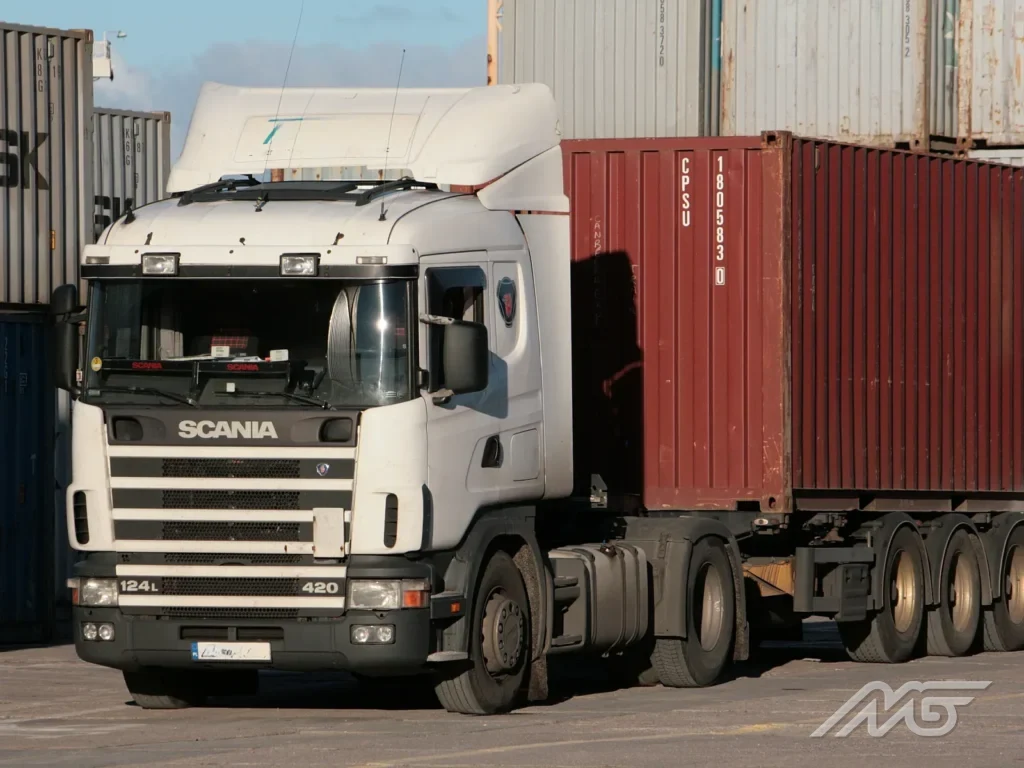
A container sitting on a terminal and a container on its way to the consignee are two separate jobs, unless one company organises both. The Szczecin-Swinoujscie port complex handles container, general cargo and ferry traffic, and moving a container from the quay to the client's premises is the natural extension of the ocean freight. We run both parts within one job, because both fall within our scope.
We move 20 ft and 40 ft containers, and High Cube units, from the terminals in Szczecin and Swinoujscie to the place of unloading in Poland and across Europe. The job covers the terminal booking, positioning the container chassis, collection, carriage and, after unloading, the return of the empty container to the nominated depot within the allotted time.
A High Cube container is 2.9 m in external height. On a standard chassis that produces a combination above the usual box height, which calls for the route to be checked for bridges and underpasses. It is one of those details settled before the vehicle is positioned, not after loading.
Containers come with two clocks that clients often confuse and that are charged separately. Demurrage is the charge for keeping a container inside the terminal beyond the free time. Detention is the charge for keeping a container outside the terminal, that is, at the consignee, beyond the time allowed for unloading and return. Both start running whether or not the client is aware of them.
Planning the haulage around those deadlines is the heart of the service. A container collected a day before the free time expires and returned on time generates neither charge, while the same container handled without a plan can add an amount comparable to the road freight itself.
The Magemar office is in Szczecin, by the port. A short run to the terminal means the chassis can be positioned on the day of the booking and, if the vessel is delayed, rescheduled without paying for an empty run from the other end of the country. The same proximity allows import clearance to be carried out on the spot, before the container sets off.
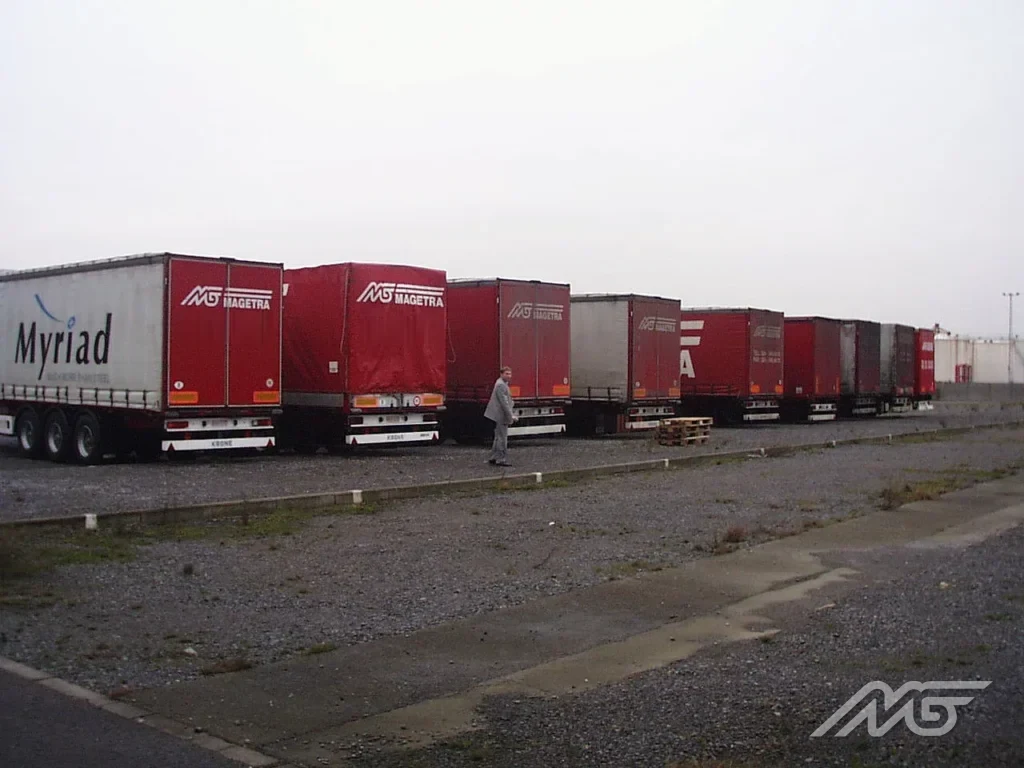
There is no price list for international transport, because a rate is built separately for every route and every date. This is not an evasion: the same cargo on the same route can cost differently depending on whether there happens to be a surplus of empty vehicles in that direction or a shortage of them. What can be shown is what the rate is made of and what moves it, so that a quotation stops being a black box.
The basis is the cost of the run: fuel, the driver's time, vehicle depreciation and road charges. To that are added route-dependent elements such as tolls in Germany and Austria, ferry charges on Scandinavian destinations, and bridge tolls. The third layer is cargo-related costs: securing the load, any permits, ADR handling, cargo insurance and customs formalities on non-EU destinations.
The most effective lever is a flexible loading window. Giving a two or three day range instead of a single date allows the cargo to be fitted into a run that is happening anyway. The second factor is regularity: on steady lanes the rate is lower, because the carrier can plan return legs. The third is choosing the right form of carriage, described above under FTL and LTL.
For a quotation we need five things: the places of loading and unloading, the dimensions and weight of the cargo, the number and type of loading units, the date, and any special requirements. On that basis we check availability with carriers and give a rate together with the date until which it stands. Quotations are free and place you under no obligation to book.
Magemar is not a carrier and owns no fleet, so the type of goods does not decide whether we take the job, but who we place it with and what documents it will need. We match the carrier to the cargo, not the cargo to a vehicle we happen to own. In practice this means four different handling routes, set out below.
Palletised goods, goods in cases and goods in outer packaging travel on a curtain-sided trailer, either as a full load or as groupage. This is what international transport from Szczecin looks like most of the time, and here the cost is settled by the choice of the form of carriage described above under FTL and LTL, not by the type of goods.
We take 20 ft, 40 ft and High Cube containers directly from the terminals in Szczecin and Swinoujscie, on a container chassis. This route has a clock of its own: the free time for returning the container and the terminal storage period both run from the discharge of the vessel, so the haulage is planned together with port forwarding, not after it.
Cargo under the ADR regime requires a carrier with properly equipped vehicles and a driver holding a valid ADR certificate, and on the consignor's side correct classification and a transport document. We run these ourselves, without a forwarding subcontractor - details on the ADR transport page.
Where the permitted length, width, height or weight is exceeded, the vehicle runs under a permit issued for a specific route, and at larger dimensions piloting is added. The time needed to issue permits has to be built into the schedule, because it can determine the departure date more than vehicle availability does. We cover this separately under oversized and heavy cargo.
The quality of an international job turns on three things that an offer does not show: the carrier's authorisations, the scope of the insurance, and who answers for the documents. Cross-border haulage is subject to requirements that domestic carriage does not know, so a company is worth checking against them before its rates are compared. A rate per kilometre is the easiest thing to compare and says the least about the risk the client is taking on. Below is what is worth checking before you hand over a consignment - whoever you ultimately hand it to.
On containerised cargo and western destinations, location stops being an organisational detail. Collection from the quay without a haul into the interior shortens the journey by several hundred kilometres, and proximity to the border means the run to it falls within the driver's first working hours. A forwarder from this region also knows the Swinoujscie ferry schedules and the working practices of the terminals, which in planning a delivery date can matter more than the rate itself. In freight forwarding terms, that proximity removes a stage from the logistics chain - a stage that a consignor in central Poland has to arrange and pay for separately.
A rate quoted without asking for dimensions, weight and cargo type means somebody will requote it after loading. A guaranteed fixed delivery date given without knowing the departure date and the traffic restrictions on the route is a promise that cannot be kept, because weekend bans apply regardless of the carrier's intentions. The last warning sign is the absence of a CMR consignment note on an international movement - without it, pursuing a claim rests on commercial correspondence alone.
A rate is built separately for every job, because it depends on the route, the date and vehicle availability in that direction. The price is made up of the cost of the run, tolls and ferry charges on the route, and costs attached to the cargo itself: securing the load, ADR handling, cargo insurance, customs formalities. What pushes it up most is the absence of a return load and next-day loading; what brings it down most effectively is a flexible loading window. To quote we need the places of loading and unloading, the dimensions and weight, the number of loading units, the date and any special requirements. Quotations are free.
What decides is crossing the border, not the distance. A run from Szczecin to Berlin is a little over 150 km and is international; a run to Rzeszow is more than 700 km and remains domestic. The legal basis changes at the border: domestic carriage rests on Polish carriage law, international carriage on the CMR Convention of 1956. That Convention is the source of the consignment note format, the scope of the carrier's liability and the time limits for claims. A Community licence is also required, and a certified copy of it must be in the vehicle.
The basis is the CMR consignment note in three original copies: for the consignor, the consignee and the carrier. A certified copy of the carrier's Community licence must be in the vehicle. For goods classified as sensitive, such as fuels, oils or denatured alcohol, a SENT notification has to be filed before the movement begins. On non-EU destinations customs documents are added: an export declaration and, where the goods travel under transit, a T1 declaration in the NCTS system or a TIR carnet. We prepare the full set on our side before the vehicle moves.
No. Germany belongs to the customs union of the European Union, so the movement is an intra-Community supply and no clearance applies. That does not mean there are no formalities: a CMR note, the carrier's Community licence and correct data for tax purposes are still needed, and for sensitive goods a SENT notification. Clearance is required on destinations outside the customs union, including Norway, the United Kingdom and Switzerland.
The carrier's liability is capped. Under Article 23(3) of the CMR Convention, compensation cannot exceed 8.33 SDR units of account per kilogram of gross weight short. For heavy, low-value cargo the limit is usually sufficient; for light, high-value cargo it does not cover even a fraction of the value of the goods. Full protection comes only from cargo insurance, which covers the consignment up to its declared value regardless of the carrier's fault. Visible damage must be notified on delivery by an entry on the CMR note, damage not apparent from the outside within seven days of delivery.
The transit time is set by drivers' hours rules, not by vehicle speed. A driver may drive for 9 hours a day, twice a week for 10 hours, with a 45-minute break after 4.5 hours of driving. One shift covers roughly 600-700 km. Southern Sweden usually fits into a single shift, but the ferry crossing from Swinoujscie and its sailing schedule are added. More distant destinations, such as northern Norway, mean at least one daily rest en route. We give a specific date after checking vehicle availability and the restrictions on the route, not from a table.
Yes, we handle ADR cargo of all classes, from explosives and gases to toxic and radioactive substances. We place the carriage only with carriers holding current certificates for the class in question, with correctly marked and equipped vehicles. The full documentation sits with us: the ADR transport document, the consignor's declaration and the written instructions for the driver. We also provide DGSA advisory services. The details are set out on a separate page devoted to ADR transport.
Groupage means using spare space on a vehicle already running a given route. The client pays in proportion to the floor space taken, so moving a few pallets works out considerably cheaper than hiring a whole trailer. The point at which it stops paying is usually around half a trailer, that is, a dozen or so euro pallets. The price of the saving is a less predictable date, because availability depends on what happens to be running in that direction. Fragile cargo, awkwardly shaped cargo and cargo requiring a controlled temperature are usually unsuitable for consolidation.
Yes. We move 20 ft and 40 ft containers, and High Cube units, from the terminals in Szczecin and Swinoujscie to the place of unloading in Poland and across Europe. The job covers the terminal booking, positioning the chassis, the carriage and the return of the empty container to the depot within the allotted time. The key is planning the haulage around the free time: demurrage is the charge for keeping a container inside the terminal, detention for keeping it outside. Without a plan, both can add an amount comparable to the road freight itself. Our office is next to the port, so the chassis can be positioned on the day of the booking.
A phone call to +48 669 331 331 or the contact form is enough. To prepare a quotation we need five things: the places of loading and unloading, the dimensions and weight of the cargo, the number and type of loading units, the date, and any special requirements such as temperature control, ADR or dimensions above the legal limits. We reply with a rate and the date until which it stands. Once the order is placed, one person runs it, from selecting the carrier to confirming unloading. Our office is by the port in Szczecin, at ulica Bytomska 7.