

Magemar is a licensed customs agency with AEO status. We handle import and export clearance, simplified procedures, transit and INTRASTAT declarations, from an office inside the Port of Szczecin, for companies across Poland.
Customs Agency - call us or send an enquiry. We prepare every quote individually.

Customs services cover the preparation of customs declarations and supporting documents, representation before the customs authorities and advice on customs and tax rules.
Our offices are inside the Port of Szczecin, so clearance is coordinated on the spot. AEO status means faster clearance and simplified procedures, recognised in every European Union member state.
We work with Wiorin, Sanepid and WIJHARS, so we also handle goods subject to phytosanitary, veterinary and quality inspections.
We handle every customs procedure a company needs when it brings goods in from outside the European Union or sends them there, from a single clearance to standing support for an importer with a fixed delivery schedule.

Every order runs through the same four steps, whether it is the client's first clearance or their hundredth. Three of them happen before the declaration is sent.
Document analysis
Preparation of declarations
Liaison with authorities
Clearance finalisation
AEO status, an office inside the Port of Szczecin and our own transport make customs clearance part of the supply chain here, rather than a separate service the client has to arrange alongside it.
AEO certificate - Authorised Economic Operator status, held by few agencies in the region
Location inside the Port of Szczecin - shorter response times and direct contact with terminals
Decades of experience - clients from across Poland since 1999
Comprehensive service - customs clearance together with sea, port and road transport
Experienced customs agents - a settled team, not a different person on every order

Contact our Customs Agency
Contact us →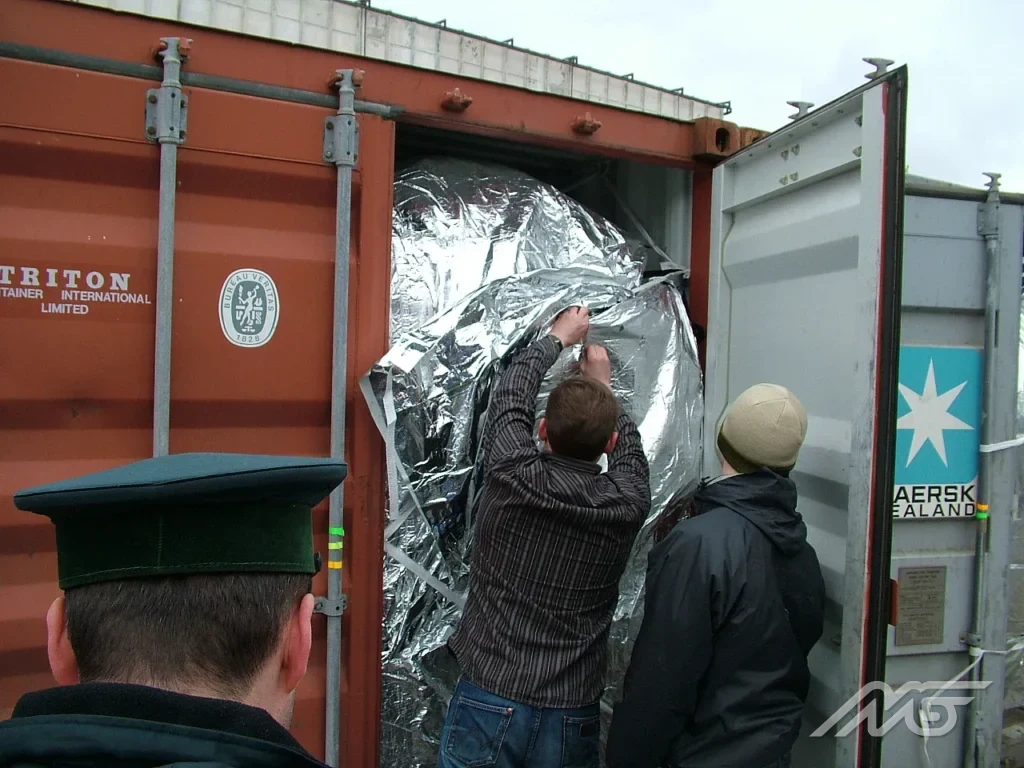
A customs agency is a company that prepares and files declarations on behalf of an importer or exporter. A customs office is a state authority that receives those declarations, checks them and releases the goods. They are two different bodies on two sides of the same counter, and confusing them costs time, because the company asks for help where it will not get any.
It acts on the instructions of a company and on the basis of a written authorisation, representing clients before the customs authorities. It classifies the goods, establishes the customs value and origin, completes the declaration, keeps track of deadlines and makes sure the documents match the cargo. Put plainly: it takes on the formalities a company does not want to run, or cannot run, on its own. The legal basis is the customs representative under Article 18 of the Union Customs Code, Regulation (EU) No 952/2013.
It is part of the National Revenue Administration (KAS). It accepts the declaration, may verify it, may order a documentary check or a physical examination of the goods, assesses duties and taxes, and finally releases the goods into the requested procedure. The office will not advise a company how to classify its goods or how to build a declaration that passes without queries. That is the agency's job.
A customs agency is a company; a customs agent is a person. It is a regulated profession: an agent must be entered on the register of customs agents kept by the Head of the National Revenue Administration under the Polish Customs Law act. Entry requires a passed examination, no criminal record for specified offences and full legal capacity. A company employing customs agents therefore stands behind people whose credentials are verified by the administration rather than claimed in a sales pitch.
A separate category, and one that cannot be bought or self-declared. Authorised Economic Operator status is granted by the customs authority after an audit of the company and is set out in Article 38 of the Union Customs Code. The regulation provides for three variants: AEOC for customs simplifications, AEOS for safety and security, and AEOF combining both. Magemar operates as a customs agency with AEO status, recognised in every European Union member state.
A company goes to the customs office for a decision and to a customs agency to have the case prepared. If a declaration is wrong, the office will not correct it for the declarant: it will ask for explanations or open proceedings, and the goods wait. Across our own orders, the companies that lose the most time are those attempting to clear their first non-EU import themselves and only realising the problem when the request for additional information arrives.
A customs agent represents a company before the customs authorities on the basis of a written authorisation, and the form of that authorisation decides who is liable for the customs debt. Representing a client in customs matters therefore starts with a document, not with the first clearance. It is the most important decision a client makes at the outset, and the one most often made without realising there is a choice at all.
The agent acts in the name of and on behalf of the client. The declarant is the company, and the agency appears as its representative. Duties and taxes are the client's liability. This is the standard arrangement for ongoing cooperation and for companies that hold their own EORI number and have a clearance history behind them.
The agent acts in their own name but on behalf of the client. The declarant is the agency, and it is liable for the customs debt jointly with the client. This form is used where, among other cases, the importer is not established in the European Union and cannot be the declarant itself. Both forms of representation are set out in Article 18 of the Union Customs Code.
Establishes the tariff classification of the goods, that is the code the duty rate and any restrictions follow from. Calculates the customs value, checks the origin and the documents that evidence it. Builds the declaration and files it electronically through PUESC, the Polish e-Tax and Customs Services Platform. Handles correspondence with the office, responds to requests and follows the release of the goods. Where the office orders an examination, the agent arranges for the goods to be presented.
The agent is responsible for the accuracy of the declaration as regards the data they prepared themselves, and for meeting deadlines. They are not responsible for a supplier's invoice stating a different quantity from what is in the container, nor for a document the client never supplied. That is why, on a first clearance from a new origin, we ask for the full set of documents in advance rather than on the day the goods arrive: correcting data before the declaration goes out costs nothing, amending it after release does not.
Tariff classification of the same product range should be repeatable from one clearance to the next. When a different person handles every order, the same goods can end up with two different codes, and the company creates an inconsistency in its own declaration history that the office can see. Experienced customs agents working on a steady client portfolio solve this without any procedure, simply by remembering the earlier declarations.
The scope of a customs agency's work goes beyond clearance itself: it covers transit, statistical reporting, tariff classification and the storage of goods under customs supervision. Our customs services cover comprehensive import and export clearance, transit, INTRASTAT declarations and advisory work. Companies usually come for one of these and need two or three, because the rules tie them together.
Preparing and filing the customs declaration for goods brought in from outside the European Union and for goods sent beyond its territory. This covers choosing the customs procedure, establishing the amounts due, handling queries from the office and securing release of the goods. On import, VAT accounting is added. On export, it is the confirmation of exit, without which the company cannot apply the zero rate.
The transit procedure allows goods to be moved across the customs territory without duties being collected at the point of entry. A T1 transit document covers non-Union goods, T2 covers Union goods moved through a third country. Declarations are handled electronically in the NCTS system, and the rules follow the Convention on a common transit procedure. Opening a transit requires a guarantee covering the amounts at stake, and the agency can provide one.
Statistical reporting of trade in goods with European Union member states. It is not a customs declaration and carries no duty, but the obligation is real and starts once a threshold is exceeded, set each year by the President of Statistics Poland. The declaration is due by the tenth day of the month following the reporting period. The legal basis is Regulation (EU) 2019/2152 on European business statistics. Most companies learn about the obligation from a reminder, because they crossed the threshold mid-year and never noticed the moment. If you buy goods in other EU member states, check whether the threshold already applies to you.
Sound advice rests on knowing the customs rules and every customs procedure used in foreign trade. The commodity code determines the duty rate, the tax rate, the licences required and whether the goods may be brought in at all. The code is built in layers: six digits come from the Harmonized System of the World Customs Organization, eight digits are the Combined Nomenclature introduced by Council Regulation (EEC) No 2658/87, and ten digits are the EU TARIC tariff with its suspensions and additional duties. Where the classification is genuinely doubtful, it is possible to apply for Binding Tariff Information, a decision of the customs authority valid for three years under Article 33 of the Union Customs Code.
Non-Union goods can wait under customs supervision with no duty or tax charged until they are released for free circulation. It is used by companies importing a consignment larger than current sales, and by goods waiting for a licence. Temporary storage after the goods are brought in is a separate arrangement: there, the declaration placing the goods under a procedure must be filed within 90 days, in line with Article 149 of the Union Customs Code.
Customs clearance is six stages, only one of which happens at the customs office; the other five happen before the declaration is sent. The process looks the same on a first declaration and on a hundredth, and only the time needed for the first two steps changes. That is why clearance time depends mainly on how early the agency receives the documents, not on how fast the office works.
Invoice, packing list, transport document and evidence of origin. This is the stage where discrepancies surface: a different quantity on the invoice than on the packing list, a missing freight value, a description of the goods too general to support a code. Putting that right now costs nothing.
Establishing the commodity code in the Combined Nomenclature and checking in TARIC which duty rate applies, whether the goods are subject to restrictions and whether they need licences or certificates. The code decides everything that follows.
The starting point is the transaction value method, that is the price actually paid for the goods, increased by transport and insurance costs up to the European Union border. The valuation rules are set out in Articles 69 to 76 of the Union Customs Code. This is where most errors arise around the delivery terms, because some of the costs sit inside the price and some outside it.
The declaration is filed electronically through PUESC, the Polish e-Tax and Customs Services Platform. Imports are handled in the AIS system, exports in AES. A customs declaration is a legal act in which the declarant applies to place the goods under a chosen procedure and takes responsibility for the accuracy of the data given.
The office may accept the declaration without queries, ask for documents, or select the goods for physical examination. An examination requires the goods to be presented, that is physically made available to the officers. This is where the location of the agency tells: our offices are inside the Port of Szczecin, so when an examination is ordered we are not travelling to the site, we are already there.
Once the duties and taxes have been assessed and either paid or secured, the office releases the goods into the procedure. From that moment the goods can be collected and moved on. Import VAT can be accounted for directly in the tax return, without paying it at the office, under Article 33a of the Polish VAT Act. Import VAT then stops tying up cash for the length of the clearance; it improves liquidity, and on our orders the large majority of regular importers use it.
The set required for an import clearance is usually five documents: the invoice, the packing list, the transport document, evidence of origin and the authorisation for the agency. The rest depends on the goods, but a gap anywhere in those five stops the case before it starts.
The basis on which the customs value is established. It must show both parties, a description of the goods, the quantity, the unit price, the currency and the delivery terms. A description along the lines of "commercial goods" is not enough to support a tariff code, and that is the first thing the office will ask about.
A statement of the contents of the consignment with gross and net weights and the number of packages. During clearance it is set against the invoice and the transport document. A weight discrepancy between those three documents is one of the most common reasons for a query.
A bill of lading for carriage by sea, a CMR consignment note for road, an air waybill for carriage by air. It evidences the route and the moment the goods were brought in, and at sea it also determines who may collect the cargo in the port.
This determines the duty rate. Free trade agreements concluded by the European Union require a EUR.1 movement certificate, and for consignments up to EUR 6,000 an origin declaration made out by the exporter on the invoice is sufficient. Without valid evidence of origin the goods pay the standard rate, even where a preference would have been available.
In writing, direct or indirect, and registered in PUESC. Without it the agency cannot file the declaration, even holding every other document. This is the most common cause of delay on a first engagement: the formality looks minor, so it ends up at the bottom of the list. Starting with a new agency? Deal with the authorisation first.
Depending on the goods: licences and phytosanitary, veterinary or quality certificates, declarations of conformity, permits, excise documents. Goods brought in temporarily for a trade fair or for testing travel on an ATA carnet issued under the Istanbul Convention. Road carriage through third countries is handled with a TIR carnet under the TIR Convention of 1975.
Documents connected with a clearance need attention after the goods are released as well: they are kept for at least three years, in line with Article 51 of the Union Customs Code. The period runs from the end of the year in which the declaration was accepted. Separate and longer periods follow from tax law, so in practice customs records are kept for as long as accounting records.
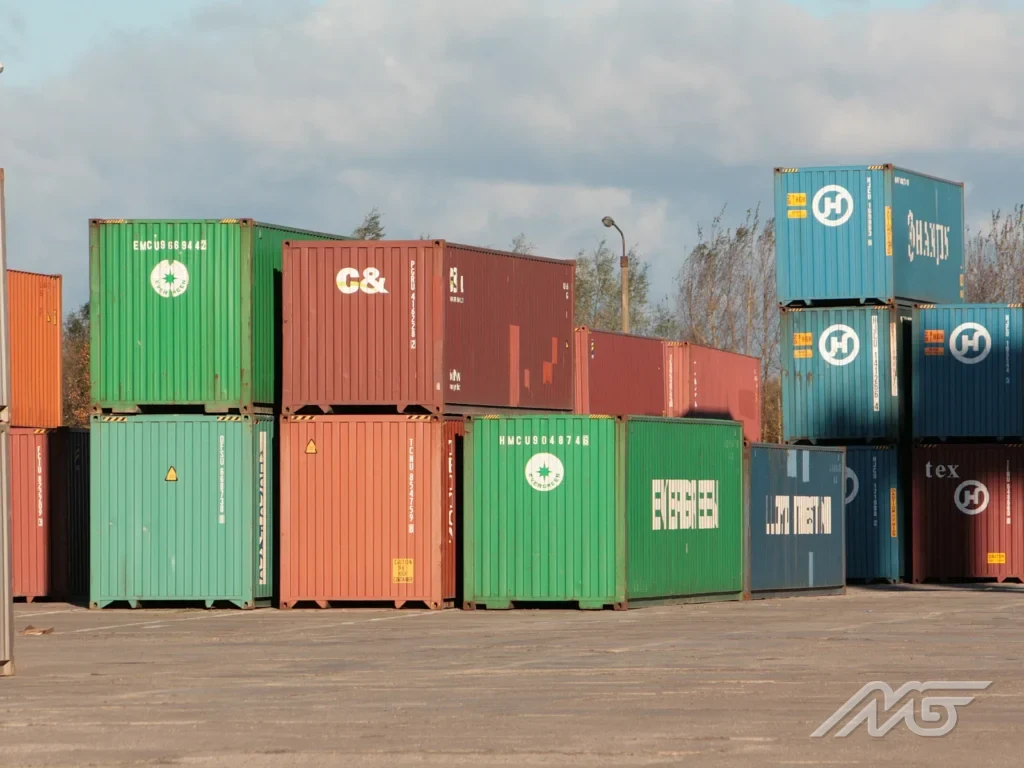
The first step towards importing is not finding a supplier or a carrier, it is obtaining an EORI number. Without one a company cannot appear on any customs declaration anywhere in the European Union, and arranging it after the goods arrive means the container waits.
It is the single identification number of an economic operator in dealings with the customs authorities, provided for in Article 9 of the Union Customs Code. It is assigned once and applies in every member state, so a company registered in Poland uses the same number for a clearance in Hamburg and in Rotterdam. The Polish number is built from the country prefix and the tax identification number padded with zeros.
Every party carrying out customs operations: companies, but also private individuals bringing goods in from outside the European Union beyond occasional private trade. The number is needed for exports and for transit as well, not only for imports.
The application is filed electronically on PUESC, the Polish e-Tax and Customs Services Platform. The same platform is then used to register the authorisation for the customs agency and the representation itself, so the account is set up once and used for every clearance that follows. If you are only planning a first import, deal with it alongside the commercial talks, not after the contract is signed.
The tariff code of the goods and the duty rate that follows from it, because that determines the real cost of the purchase. The licences and certificates required, because some goods will not be released without them however much duty is paid. The delivery terms, because they decide which part of the transport cost goes into the customs value. And the way import VAT will be accounted for. Those four things need settling before the order is placed, not after.
Customs agencies work above all where goods enter the European Union: at seaports, at border crossings and at larger air and rail terminals. A client does not, however, need to look for an agency in their own city. Declarations are filed electronically through PUESC, so the client's registered office and the agency's office never have to meet. We serve clients from across Poland, and the location of our offices inside the Port of Szczecin matters where something happens physically: at an examination, at a border inspection and in coordination with the terminal.
On import the goods enter the customs territory of the European Union and amounts become due; on export the goods leave it and the right to the zero rate of VAT arises. Opposite directions and opposite logic of risk: on import the point is to pay the correct amount, on export it is to prove the goods really left.
Goods brought in from outside the European Union are cleared under the release for free circulation procedure. Duty is charged at the rate following from the tariff code and the origin, VAT on the customs value increased by the duty, and for part of the product range excise duty as well. Once the amounts are paid or secured, the office releases the goods.
Goods exported beyond the customs territory of the European Union are declared for the export procedure in the AES system. Export duty is not charged in practice, but the clearance is no formality: without electronic confirmation that the goods left the customs territory, the exporter cannot apply the zero rate and will account for the transaction at the domestic rate. Confirmation of exit is a document a tax inspection will ask for, not a customs one.
Relief from customs duty covers consignments with a value of up to EUR 150, under Council Regulation (EC) No 1186/2009. It is not, however, relief from tax: the former EUR 22 threshold was abolished on 1 July 2021 with the EU e-commerce VAT package, so VAT is due from the first euro. This is the most common misunderstanding among companies starting to buy from China.
Buying goods in another European Union member state is not an import and needs no customs declaration. What does arise is the INTRASTAT reporting obligation once the threshold is exceeded. Companies mix these two up regularly, and either look for a customs agency where none is needed or miss the statistical obligation where it applies.
Companies trading goods internationally rarely need only one thing. Imports and exports of the same company run by a single agency give a consistent declaration history and repeatable classification. A comprehensive scope means the customs formalities and the sea, port and road transport are run by one team, so the goods do not change hands at the boundary between forwarding and clearance. For clients trading goods across borders that means a single point of contact for both import and export.
A clearance invoice carries two entirely different items: the amounts due to the state and the agency's fee. The first is calculated from the rules and is not negotiable; the second depends on the work involved. Companies comparing quotes often set against each other totals in which the two are mixed together.
Duty follows from the rate assigned to the tariff code in TARIC and from the origin of the goods. The spread is enormous: part of the product range carries a zero rate, part rates in the low double digits, and with anti-dumping duties the burden can be several times higher. VAT is charged on the customs value increased by the duty, at the standard rate of 23%. The agency neither sets nor keeps any of these amounts.
It is normally charged per declaration, not on the value of the goods. That matters, because handling a container worth PLN 20,000 and one worth PLN 200,000 costs much the same when the work involved is the same.
The number of tariff items in a single declaration, because each has to be classified separately. The completeness of the documents, because filling gaps means additional correspondence. A physical examination ordered by the office, which requires someone present when the goods are presented. A guarantee for a transit. Clearance outside standard working hours. On our own figures, the most expensive orders are not the highest in value but the ones with a fragmented product range and incomplete paperwork.
Container demurrage and terminal storage accrue independently of the clearance, and once free time runs out they can exceed the entire customs service. Every day of delay in filing therefore has a price that does not show on the agency's invoice, only on the shipping line's and the terminal's. That is why documents should reach the agency before the vessel arrives, not after.
We prepare quotes individually, once we have seen the product range and the full set of documents. Regular clients get a fixed rate per declaration agreed in advance, so the cost is known before an order is placed with the supplier rather than after the goods arrive.
Call +48 669 331 331 or send an enquiry through the form. Three things help at the start: what the goods are, where they are coming from and when they are needed. If it is urgent because the goods are already standing, give the container or consignment number straight away - it lets us check the status before we call back. Contact with the customs office on cases we run is taken over entirely by us; the client does not need to call them.
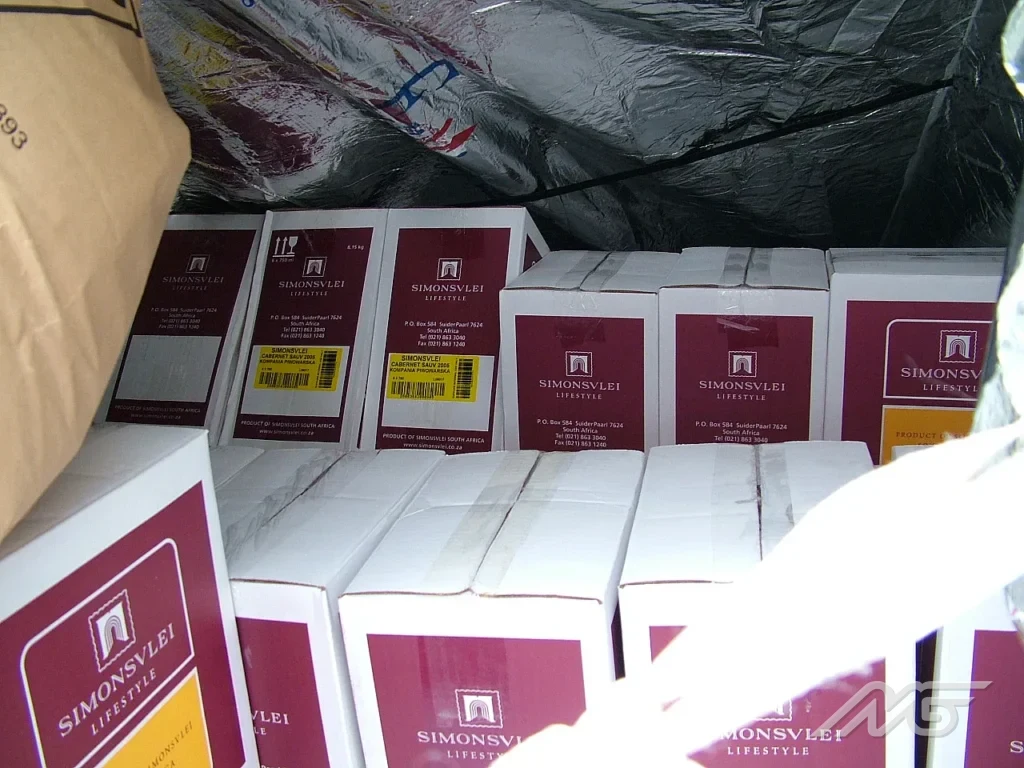
Two matters that bring private individuals rather than companies to a customs agency: a consignment held for clearance, and a move to Poland from outside the European Union. Both are governed by different rules from ordinary commercial imports, and both can be settled more cheaply when you know what relief is available.
A consignment from outside the European Union is subject to a customs declaration in the same way as a container, only in a simplified form. Relief from customs duty covers consignments with a value of up to EUR 150 under Council Regulation (EC) No 1186/2009, but VAT is due from the first euro, since the former EUR 22 threshold was abolished on 1 July 2021.
The most common problem is a value understated by the seller, or a description that does not allow classification. The consignment then waits and the recipient receives a request for proof of payment. Gifts between private individuals have their own, lower relief and their own conditions, so marking a parcel as a gift when buying from an online shop does not work.
Someone transferring their normal residence from a third country to the European Union may bring in personal property free of duty. The conditions follow from Council Regulation (EC) No 1186/2009: at least twelve months of residence outside the Union, property used for at least six months before the move, and a declaration within twelve months of the transfer of residence. For a further twelve months the relieved property may not be sold or hired out without notifying the customs authority.
The relief does not cover everything. Outside its scope are, among others, goods of a commercial nature, alcohol and tobacco products, while means of transport and professional equipment have separate conditions. Documents evidencing residence and ownership are best gathered in advance, because assembling them after arrival tends to be harder than before departure.
For a single parcel, usually not. It is different for a household move, a high value consignment, goods requiring a licence, and anywhere a consignment has already been held up. A customs agent will then establish the legal basis and prepare the declaration in one go, instead of an exchange of letters during which storage charges accrue.
A customs agency is a private company acting on the instructions of an importer or exporter: it classifies the goods, prepares the declaration and represents the client. A customs office is an authority within the National Revenue Administration that receives the declaration, verifies it, assesses the amounts due and releases the goods. The office will not advise on how to build a declaration and will not correct an error for the declarant. You go to the office for a decision and to an agency to have the case prepared.
The cost is made up of two different things. The amounts due to the state, that is duty at the TARIC rate and VAT calculated on the customs value increased by the duty, follow directly from the rules and are not negotiable. The agency fee is normally charged per declaration rather than on the value of the goods, so it depends on the number of tariff items and the completeness of the documents, not on what the goods cost. We prepare quotes individually once we have seen the product range.
The basic set for an import is the commercial invoice, the packing list, the transport document, evidence of origin and the authorisation for the agency registered in PUESC. Depending on the goods, licences, phytosanitary, veterinary or quality certificates and declarations of conformity are added. A preferential duty rate requires a EUR.1 certificate, and for consignments up to EUR 6,000 an origin declaration on the invoice is sufficient. Records connected with the declaration are kept for at least three years, in line with Article 51 of the Union Customs Code.
A declaration filed electronically can be dealt with the same day, provided the documents are complete and the office orders no check. The real timing is settled earlier: incomplete paperwork brings an exchange of letters, and an examination requires the goods to be physically presented. That is why we ask for documents before the vessel arrives rather than after. Goods placed in temporary storage must be declared for a procedure within 90 days under Article 149 of the Union Customs Code, but terminal charges start accruing long before that.
Yes. EORI is the single identification number of an economic operator in dealings with the customs authorities, provided for in Article 9 of the Union Customs Code. Without it a company cannot appear on any customs declaration within the European Union. The number is assigned once and applies in every member state, and the application is filed electronically through PUESC, the Polish e-Tax and Customs Services Platform. It is worth arranging alongside the commercial talks, because obtaining it after the goods arrive means the container stands and charges accrue.
Under direct representation the agent acts in the name of and on behalf of the client: the declarant is the company, and duties and taxes are its own liability. Under indirect representation the agent acts in their own name but on behalf of the client, so the declarant is the agency and it is liable for the customs debt jointly with the client. The indirect form is used where, among other cases, the importer is not established in the European Union. Both are set out in Article 18 of the Union Customs Code, and we agree which applies before the first declaration.
Yes, we serve clients from across Poland. Customs declarations are filed electronically through PUESC, so the company's registered office does not have to be in the same city as the agency. The location of our offices inside the Port of Szczecin matters where something happens physically: at an examination of the goods, at border inspections and in coordination with handling terminals. If the goods enter through another crossing, we run the case remotely on the same terms.
By telephone on +48 669 331 331 or through the enquiry form on the website. Tell us what the goods are, where they are coming from and when they are needed; on that basis we establish the scope of the work and prepare a quote. When the goods are already standing and every day counts, give the container or consignment number straight away. We will check the status before we call back.
AEO is Authorised Economic Operator status, granted by the customs authority after an audit of the company and set out in Article 38 of the Union Customs Code. It cannot be bought or self-declared. For the client it means fewer controls, priority in those controls that do take place, and access to procedural simplifications. The status is recognised in every European Union member state. The regulation provides for three variants: AEOC for customs simplifications, AEOS for safety and security, and AEOF combining both.
Yes, it is a regulated profession. A customs agent must be entered on the register of customs agents kept by the Head of the National Revenue Administration under the Polish Customs Law act. Entry requires, among other things, a passed examination, full legal capacity and no criminal record for specified offences. For the client this has a practical meaning: the credentials of the person handling their declarations are verified by the administration rather than claimed in a sales pitch. A customs agency is a company, a customs agent is a person, and it is the agent who answers for the acts they perform.