Timber Products in Sea Freight - What You Need to Know

Sea freight of timber products - such as wood, furniture boards and plywood - is the primary mode of transport for this category of goods on international markets. Poland, as a significant producer of furniture and timber materials, relies heavily not only on exports to foreign markets, but also on the growing import of raw materials from Europe and beyond. For the transport to run smoothly, careful planning, proper documentation and knowledge of applicable regulations are essential. That is why choosing the right freight forwarder - one who will ensure efficient transport and the safety of your cargo - is so important.
What timber products are transported by sea?
The most commonly shipped goods are raw materials and semi-finished timber products, including logs and sawn timber - the latter being a product obtained by sawing roundwood. This category also covers wood chips and wood pellets used in the paper or energy industry, as well as pulp - the primary raw material in paper production. Sea freight also covers a wide range of construction and finishing materials, such as plywood, particleboard and MDF panels, as well as floorboards and other structural timber elements. Finished goods from the furniture industry are another major category transported by sea. Finally, paper products - including paper, cardboard and cartons - as well as wooden crates and packaging, round out the picture.
Sea Freight of Timber Products - Choosing the Right Container
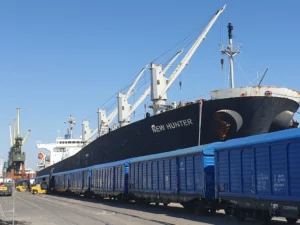
One of the most important decisions in sea freight of timber products is choosing the appropriate type of container. For finished goods such as furniture, furniture boards or plywood, standard 20- or 40-foot containers carried on container ships are most commonly used. For larger volumes of raw materials - such as wood chips - the cargo is often handled as bulk freight instead.
The way goods are packed and secured is equally critical. Timber products are highly sensitive to external factors, including humidity, temperature, mechanical stress and prolonged transit times. Cargo must be packed to protect it from moisture and properly secured against the natural movement and shifting that occurs during sea transport.
An important aspect of maritime transport of timber materials is compliance with phytosanitary regulations - a set of rules designed to protect the health and safety of plants and plant-based materials from harmful organisms during international transport.
Freight forwarding, documentation and transport organisation
Organising sea freight for timber products efficiently requires knowledge of regulations, experience in assembling documentation and the ability to coordinate multiple parties at once. That is why most companies choose to work with an experienced sea freight forwarder who takes on the entire process.
The key document in sea freight is the Bill of Lading - it serves as the contract of carriage, the carrier’s receipt of the goods, and the document entitling the holder to collect the cargo at the port of destination. For timber products, phytosanitary certificates issued by the relevant plant health authority are also required, confirming that the goods are free from pests and plant diseases. The full set of documents also includes a commercial invoice, packing list and certificates confirming the legal origin of the timber - such as FSC or PEFC - which are increasingly required in Western European markets.
An experienced freight forwarder will not only compile the required documentation, but also advise on the optimal route, choice of carrier and cargo insurance - which is particularly important for timber products, given their vulnerability to moisture damage and mechanical stress during transport.
Magemar Polska - sea freight expertise
Magemar Polska is a specialised sea freight operator with extensive experience in organising the transport of various types of cargo, including timber products. The company is part of an international logistics group, which it forms together with the Magetra, CBT-Magemon and Dongemar brands. The group’s history dates back to the 1930s and its operations in Liège, Belgium - one of the most significant inland ports in Western Europe.
Today, the group handles over 6 million tonnes of cargo annually, covering bulk, general and containerised freight. Magetra specialises in road and combined transport, while Magemar Polska handles the sea freight segment. The presence of Dongemar in Xiamen, China, strengthens the group’s capacity to service trade lanes with the Asian market - one of the key destinations for Polish timber products and furniture exports.
For companies in the timber industry, this means comprehensive support from a single logistics operator - whether for regular container shipments or larger volumes of raw materials transported as bulk cargo.